
Get In Touch

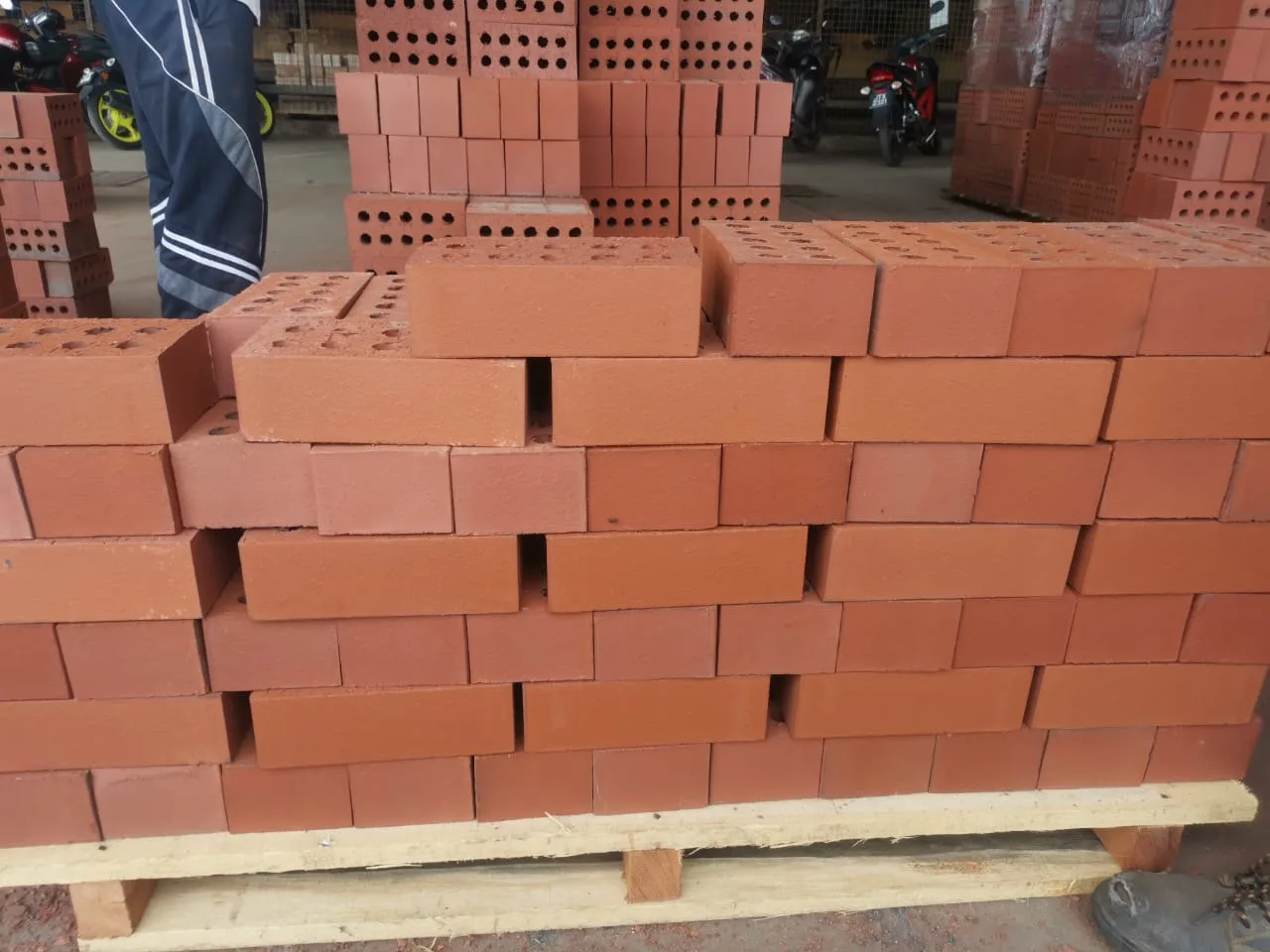
    High-quality red clay facing bricks from BuildiBudget

    Why Clay Facing Bricks Are Ideal for Malaysia’s Tropical Weather?

    Introduction

    Building in Malaysia presents unique architectural challenges. The tropical climate featuring relentless equatorial sunshine, high humidity, and intense monsoon seasons acts as a harsh testing ground for construction materials. Traditional building methods often rely heavily on concrete sand bricks finished with layers of plaster and paint. These materials frequently fail under weather stress, which leads to cracked walls, peeling paint, and trapped indoor heat.

    For architects, developers, and homeowners looking for a material that thrives in these conditions, clay facing bricks offer a time-tested alternative. Beyond their aesthetic appeal, the physical properties of fired clay make them uniquely suited to withstand the environmental demands of the local climate.
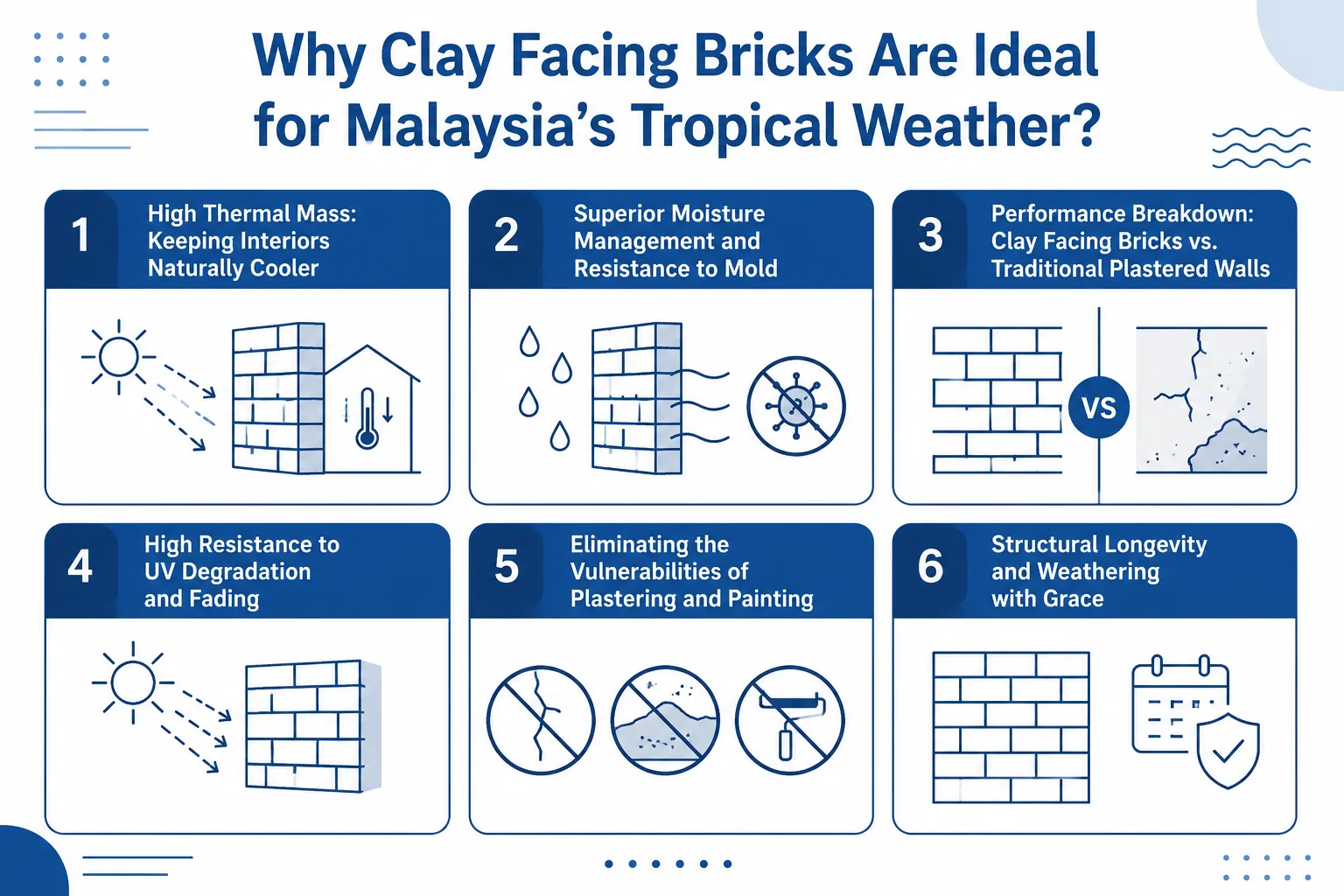
    1. High Thermal Mass: Keeping Interiors Naturally Cooler

    Managing solar heat gain is a major challenge in Malaysian building design. Clay facing bricks possess high thermal mass, meaning they absorb, store, and release heat energy slowly rather than transferring it immediately indoors.

    • Thermal Delay Effect: Extruded clay absorbs solar radiation during peak afternoon hours, trapping the heat within the dense brick structure before it can reach interior spaces.
    • Nighttime Heat Release: The stored heat is only released hours later during the cooler night periods when natural ventilation can easily disperse it.
    • Reduced AC Dependency: By naturally smoothing out indoor temperature spikes, buildings constructed with facing bricks experience significantly lower cooling loads, lowering energy bills in hot urban hubs like Kuala Lumpur and Selangor.

    2. Superior Moisture Management and Resistance to Mold

    With relative humidity hovering between 75% and 90% year-round alongside sudden heavy downpours, moisture management is critical to prevent structural and cosmetic degradation.

    • Low Water Absorption: Fired at temperatures exceeding 1,000°C, the vitrification process creates a high-density brick with minimal water absorption rates compared to porous sand-cement options.
    • Breathable Micro-porous Structure: While external brick faces get wet during heavy monsoons, the natural pores allow moisture to evaporate rapidly once the sun returns, preventing dampness from sinking deep into the wall.
    • Algae and Moss Prevention: Rapid surface drying completely eliminates the sustained damp conditions required for unsightly green algae, moss, and black mold spores to take root.

    3. Performance Breakdown: Clay Facing Bricks vs. Traditional Plastered Walls

    Performance Metric

    Clay Facing Bricks

    Traditional Sand Bricks + Plaster + Paint

    UV ResistanceExceptional. Natural minerals are baked-in permanently; will never fade or bleach under intense sun.Poor. Standard exterior paints undergo UV chalking and fading, requiring repainting every 3–5 years.
    Moisture AbsorptionLow & Breathable. Micro-porous structure restricts deep penetration and dries rapidly.High & Trapped. Porous plaster absorbs rain; moisture gets trapped behind paint layers, causing blistering.
    Thermal InsulationHigh Thermal Mass. Absorbs heat during the day and releases it slowly at night, keeping interiors cooler.Low Thermal Mass. Transmits solar heat rapidly into living spaces, increasing indoor temperatures.
    Maintenance NeedsVirtually Zero. No painting, plastering, or specialized cleaning required over its lifespan.High. Ongoing costs for hairline crack patching, algae washing, and periodic cosmetic repainting.
    Risk of Structural CrackingNegligible. Fired clay accommodates minor thermal movement without surface degradation.High. Rapid expansion/contraction cycles from hot sun to sudden rain easily crack external plaster layers.

    4. High Resistance to UV Degradation and Fading

    Intense ultraviolet (UV) radiation from equatorial sun exposure destructively breaks down chemical colorings, artificial pigments, and protective wall coatings.

    • Natural Mineral Pigments: The rich red, terracotta, and brown hues are achieved entirely via natural mineral compositions (like iron oxide) baked permanently into the clay during manufacturing.
    • Homogeneous Material Integrity: Because the color is uniform throughout the entire block, the surface cannot peel, flake, chip, or bleach under prolonged UV exposure.
    • Preserved Curb Appeal: Facades maintain their original rich appearance decades after installation, eliminating the ongoing maintenance budgets required for cosmetic updates.

    5. Eliminating the Vulnerabilities of Plastering and Painting

    Conventional walls rely on a multi-layered finishing process: bricklaying, structural plastering, skim coating, priming, and painting. Every added layer represents a potential point of structural failure.

    • Elimination of Thermal Stress Cracking: Rapid cycling between intense afternoon heat (expansion) and sudden downpours (contraction) easily cracks rigid external plaster. Facing bricks accommodate minor movements without cracking.
    • Water Infiltration Prevention: By removing vulnerable plaster layers, you prevent rainwater from seeping into hairline cracks, which rusts internal reinforcement bars and causes concrete delamination.
    • Fewer Construction Stages: The brick acts simultaneously as the load-bearing structure and the final aesthetic finish, significantly lowering initial labor complexities and material costs.

    6. Structural Longevity and Weathering with Grace

    Many modern synthetic materials look clean at handover but deteriorate quickly under tropical conditions. Clay facing bricks are highly resilient materials that age exceptionally well.

    • Graceful Aging Process: Over decades of exposure to wind and rain, natural clay develops a subtle, distinguished patina that enhances structural character, a feature highly valued in premium commercial spaces, retail designs, and modern cafes.
    • High Compressive Strength: Clay blocks maintain high dimensional stability, meaning they will not warp under extreme thermal stress, rot in high humidity, or break down when exposed to acidic rainwater.
    • Set-and-Forget Architecture: Choosing clay facing bricks provides a permanent architectural solution engineered to outlast standard alternative materials with zero structural degradation.

    Conclusion: A Smarter Investment for Tropical Architecture

    Designing and building for Malaysia’s tropical weather requires materials that work with nature, not against it. Fired clay facing bricks provide a comprehensive solution to the region’s most persistent construction pain points: they mitigate indoor heat through high thermal mass, manage moisture to prevent mold, resist UV fading completely, and eliminate the recurring costs associated with cracked plaster and peeling paint. When considering total cost of ownership, energy savings, and structural permanence, clay bricks stand out as an exceptional choice for sustainable, low-maintenance tropical architecture.

    Achieving these long-term benefits depends entirely on sourcing high-density, consistently fired raw materials engineered to meet structural standards. If you are planning a commercial development, an industrial layout, or a residential renovation within the Klang Valley or across Malaysia, securing the right supply in bulk is the critical first step. Consider partnering with a dedicated local supplier like Buildi Budget to source premium, weather-resistant facing bricks tailored for trailer or pallet delivery directly to your project site.

    Frequently Asked Questions

    Do exposed facing bricks grow moss or mold in Malaysia?

    No. Because clay facing bricks are fired at temperatures exceeding 1,000°C, they are highly dense with low water absorption. Their breathable micro-porous structure allows any surface moisture from heavy rains to evaporate rapidly, preventing the damp, sustained conditions required for mold or algae to take root.

    Do clay facing bricks fade under the intense tropical sun?

    Not at all. The rich terracotta, red, and brown hues of facing bricks come from the natural mineral content baked permanently into the clay during production. Unlike painted surfaces that experience UV chalking and fading within a few years, clay bricks maintain their original color indefinitely without repainting.

    Is it more expensive to build with facing bricks compared to plastering and painting?

    While the upfront material cost of premium clay bricks can be higher than raw sand bricks, they save significant money over time. By entirely eliminating the initial and recurring costs of plastering, priming, and painting every few years, facing bricks drastically lower long-term maintenance budgets.

    Where can I buy high-quality facing bricks in bulk within Malaysia?

    You can source durable, weather-resistant clay facing bricks directly from Buildi Budget, a leading facing brick supplier Malaysia trusts for commercial and residential developments. They provide direct trailer and pallet delivery options across the Klang Valley and surrounding regional hubs.

    Can facing bricks be used for interior feature walls, or are they only for outside?

    They are exceptional for both. While their weather-resistant properties make them perfect for external building facades, facing bricks are highly popular indoors to create industrial, rustic, or modern farmhouse feature walls. Common interior installations include TV backdrops, kitchen island surrounds, and statement walls in cafes or retail shops.

    Disclaimer: The information published on this blog is for general informational purposes only and should not be considered professional, technical, engineering, architectural, legal, or financial advice. Readers should consult qualified professionals before making decisions based on the content. Buildi Budget is not liable for any actions taken based on this information.